WUMO PDRN+™ · 6:1 Hydroxyethyl Chitosan Co-Assembly (HCS@PDRN)

Does Topical Salmon DNA Penetrate Skin? Inside Our 188 nm Transdermal PDRN+™ Platform

Unmodified topical salmon DNA (Sodium DNA) largely remains on the stratum corneum because its 50–1,500 kDa polymer chains sit far above the 500 Da passive diffusion threshold and carry a strong -32.9 mV negative charge. WUMO PDRN+™ uses a validated 6:1 hydroxyethyl-chitosan co-assembly to condense free PDRN from 539.5 nm down to 188.0 ± 4.32 nm (PDI 0.14), increasing 4-hour ex vivo porcine skin Raman permeation by +494.44%.

At-a-Glance Head-to-Head Comparison Card

Standard Unmodified Salmon PDRN vs. WUMO PDRN+™ (6:1 HCS@PDRN Carrier System)

+494.44% 4h Raman 188.0 nm · PDI 0.14 +260% 8h In Vivo
Head-to-head measured comparison between standard unmodified free salmon PDRN and WUMO PDRN+ 6:1 hydroxyethyl chitosan transdermal nanocarrier complex
Measured Parameter Standard Free Topical PDRN WUMO PDRN+™ (6:1 Hydroxyethyl Chitosan System)
Hydrodynamic Particle Size (DLS) 539.5 ± 20.42 nm (broad, uncondensed macromolecular coils) 188.0 ± 4.32 nm at optimal 6:1 HCS:PDRN ratio (-65.2% size compression)
Polydispersity Index (PDI) & Gel Binding PDI 0.53 ± 0.03 (heterogeneous distribution; bright unbound DNA band) PDI 0.14 ± 0.01 (highly monodisperse; agarose gel Lane 7 confirms complete DNA complexation)
Surface Zeta Potential -32.9 ± 5.18 mV (strongly repelled by anionic cell membranes) -16.1 ± 3.64 mV (electrostatic shielding via deacetylated hydroxyethyl-chitosan amino groups)
Ex Vivo Porcine Skin Raman Permeation 0.2% Free PDRN baseline (1.00× reference; mostly stranded on superficial corneocytes) +494.44% at 4h (~6× faster entry), +213.77% at 8h & +42.59% at 12h (sustained 20–120 μm depth)
In Vivo Murine Skin Fluorescence 0.1% Free PDRN topical control +190% at 2h and +260% at 8h dermal fluorescence intensity (p < 0.001)
Cellular & In Vivo Soothing Gain (vs. Equal-Dose Free PDRN) 0.05% (500 ppm) or 0.029% (290 ppm) free PDRN alone HaCaT TNF-α -28.82%, IL-1β -23.96%, IL-6 -33.13%; 24h scratch -34.23%; EdU +22.91%; DNFB epidermal thickening -52.26%

Biophysical Bottleneck Analysis

Three Reasons Unmodified Topical Salmon DNA Fails to Cross Intact Skin

Why adding 1,000–2,000 ppm of naked Sodium DNA powder to a water serum rarely translates into dermal bioavailability.

Bottleneck 01

50 – 1,500 kDa Macromolecular Barrier

Conventional salmon-sperm polydeoxyribonucleotide (Oncorhynchus mykiss / Oncorhynchus keta) spans 50,000 to 1,500,000 Da—100× to 3,000× larger than the 500 Da stratum corneum passive diffusion threshold.

Bottleneck 02

-32.9 ± 5.18 mV Electrostatic Repulsion

Unmodified PDRN’s polyphosphate backbone carries a strong negative charge (measured Zeta potential -32.9 ± 5.18 mV), causing electrostatic repulsion against negatively charged human keratinocyte and fibroblast membranes.

Bottleneck 03

Nuclease Vulnerability & High-ppm Surface Waste

Naked free PDRN suffers rapid surface degradation and poor cellular internalization; dumping 2,000+ ppm of raw powder merely inflates FOB formula cost and leaves a tacky film on the epidermis.

6:1 Cationic-Anionic Co-Assembly Cascade

How WUMO PDRN+™ Transports Salmon DNA From Stratum Corneum to Intracellular A2A Receptors

Deacetylated amino groups on Hydroxyethyl Chitosan condense anionic PDRN chains via electrostatic, hydrogen-bonding, and hydrophobic interactions—executing a four-stage delivery cascade before biodegrading into endogenous D-glucosamine.

Step 01 · Cationic Amino Surface Anchoring

Bio-Adhesion on Stratum Corneum

Deacetylated amino groups on Hydroxyethyl Chitosan (INCI: Water, Hydroxyethyl Chitosan, 1,2-Pentanediol, Hydroxyacetophenone; formula pH 5.0–8.0) increase cutaneous affinity so the 6:1 co-assembled complex anchors onto negatively charged corneocytes instead of washing or rubbing away.

Step 02 · Paracellular Lipid & Follicular Transport

188.0 nm Nanoscale Barrier Permeation

Electrostatic, hydrogen-bonding, and hydrophobic weak interactions coil long anionic PDRN chains into monodisperse 188.0 ± 4.32 nm nanospheres (PDI 0.14), traversing intercellular lipid pathways and hair-follicle appendages down to 20–120 μm viable epidermis and dermis.

Step 03 · Overcoming -32.9 mV Membrane Repulsion

Fibroblast Macropinocytosis Uptake

Shielding naked polyphosphate negative charge triggers active macropinocytosis at the fibroblast membrane—verified by markedly stronger 4-hour Cy5/FITC dual-fluorescent intracellular colocalization compared with free PDRN.

Step 04 · A2A Receptor & DNA Salvage Activation

Endolysosomal pH Escape & D-Glucosamine Biodegradation

Inside mildly acidic late endosomes/lysosomes, protonation-driven swelling releases intact PDRN to engage adenosine A2A receptors and the DNA salvage pathway—while glycoside hydrolases naturally degrade the chitosan carrier into endogenous D-glucosamine.

Laboratory & Third-Party Preclinical Substantiation

Raman Depth Permeation, DLS Condensation & Cellular/In Vivo Efficacy Benchmarks

Every benchmark below compares WUMO PDRN+™ directly against an equal active concentration of unmodified free PDRN—isolating the exact performance contribution of the 6:1 hydroxyethyl-chitosan carrier.

Ex Vivo Porcine Skin Raman (4h / 8h / 12h)

Sustained 20–120 μm Epidermal & Dermal Delivery

4 Hours vs. 0.2% Free PDRN +494.44% (~5.9×)
8 Hours vs. 0.2% Free PDRN +213.77% (~3.1×)
12 Hours vs. 0.2% Free PDRN +42.59% (~1.4×)

Cellular & Murine Soothing Delta (vs. Equal Free PDRN)

Bioactivity Amplification After Intracellular Entry

In Vivo Dermal Fluorescence (8h) +260% (p < 0.001)
DNFB Epidermal Thickening Relief (High Group) -52.26% vs. Free PDRN
HaCaT IL-6 Suppression / 24h Scratch Area -33.13% / -34.23%
Summary of DLS, agarose gel electrophoresis, ex vivo porcine Raman spectroscopy, in vivo murine dermal fluorescence, HaCaT oxidative-injury, and DNFB soothing benchmarks for WUMO PDRN+
Evaluation Tier Experimental Model & Protocol Control Baseline Verified WUMO PDRN+™ Result
DLS & Gel Electrophoresis (6:1 Ratio Screen) Aqueous self-assembly across carrier:PDRN ratios; agarose gel Lane 7 verification Unmodified Free PDRN (539.5 ± 20.42 nm, PDI 0.53 ± 0.03, Zeta -32.9 ± 5.18 mV) Compressed to 188.0 ± 4.32 nm minimum, PDI 0.14 ± 0.01, Zeta -16.1 ± 3.64 mV; unbound free DNA band nearly eliminated
Third-Party Ex Vivo Porcine Skin Raman Spectroscopy 1.2% Hydroxyethyl Chitosan Carrier + 0.2% PDRN across excised porcine skin (20–120 μm depth scan) Equal-concentration 0.2% Free PDRN aqueous control 4h: +494.44% (~6× speed) · 8h: +213.77% · 12h: +42.59% transdermal absorption efficiency
In Vivo Murine Skin Fluorescence Permeation 0.6% Carrier + 0.1% Fluorescently Labeled PDRN on intact murine skin Equal-concentration 0.1% Free Labeled PDRN 2h: +190% · 8h: +260% dermal fluorescence intensity increase (p < 0.001)
HaCaT Anti-Inflammation, Scratch Repair & EdU Proliferation 0.3% Carrier + 0.05% (500 ppm) PDRN in H2O2 oxidative-injury keratinocyte/cellular assays Equal-concentration 0.05% (500 ppm) Free PDRN alone TNF-α -28.82%, IL-1β -23.96%, IL-6 -33.13%; 24h residual scratch area -34.23%; EdU+ proliferative cells +22.91%
In Vivo Murine DNFB Contact Soothing Benchmark Low / Mid / High 6:1 carrier-co-assembled topical groups in DNFB-sensitized murine skin 0.029% (290 ppm) Free PDRN group (plus dexamethasone 0.05% positive reference -51.98%) Epidermal thickening further reduced by -20.11% / -38.38% / -52.26%; spleen inflammatory index -6.64% / -16.85% / -25.15%; markedly fewer infiltrating mast cells

Original Laboratory Micrographs & Electrophoresis Plates

Visual Proof: SEM Nanosphere Condensation, Gel Retardation, Dermal Permeation & Cellular Uptake

Authentic Hitachi SU8600 scanning electron micrographs, agarose gel electrophoresis, confocal skin permeation, fibroblast internalization, and 24h scratch/EdU repair plates comparing 6:1 WUMO PDRN+™ directly against equal-concentration free PDRN.

Figure 1 · Hitachi SU8600 SEM

6:1 Electrostatic Co-Assembly Compresses Amorphous DNA into Discrete Nanospheres

Scanning electron microscopy (SU8600, 3.00 kV) confirms morphological condensation from irregular unencapsulated PDRN clusters into discrete 6:1 HCS@PDRN microspheres (DLS 188.0 ± 4.32 nm, PDI 0.14).

Figure 2 · Agarose Gel & DLS

Lane 7 (N/P = 6:1) Complete Nucleic Acid Retardation & DLS Size Minimum

Multi-ratio screening from N/P = 0.5 to 20 identifies 6:1 (Lane 7) as the formulation sweet spot where unbound free PDRN disappears and hydrodynamic diameter reaches its 188.0 nm minimum.

Figure 3 · In Vivo Dermal Fluorescence

+190% (2h) & +260% (8h) Cross-Sectional Cutaneous Permeation (p < 0.001)

Dual-labeled Cy5.5-PDRN and FITC-chitosan skin sections (200 μm scale) demonstrate +190% (2h) and +260% (8h) deeper dermal transport vs. free PDRN—complementing +494.44% 4h ex vivo porcine Raman spectroscopy.

Figure 4 · Intracellular Macropinocytosis

0.5 h – 4 h Fibroblast Internalization & Lyso-Tracker Endosomal Escape

Time-course fluorescence imaging in human dermal fibroblasts (10 μm scale) shows markedly stronger intracellular Cy5/FITC uptake by 4 hours compared with membrane-repelled free PDRN.

Figure 5 · Scratch Migration & EdU S-Phase

-34.23% Residual Scratch Gap (24h) & +22.91% EdU+ Proliferating Cells

At matched 500 ppm PDRN concentration under H2O2 oxidative injury, 6:1 co-assembly accelerates 24h scratch closure (-34.23% residual gap) and boosts S-phase DNA-replicating EdU+ cells by +22.91% vs. free PDRN.

Laboratory Figure Preview

Hitachi SU8600 scanning electron microscopy comparing unencapsulated free PDRN aggregates with 6:1 WUMO PDRN+ nanospheres

Background Pharmacology Reference (External Literature)

Adenosine A2A Receptor & DNA Salvage Pathway Mechanism of Salmon PDRN

We distinguish clearly between public pharmacological mechanism literature on polydeoxyribonucleotide and our proprietary enterprise/third-party preclinical raw-material data above.

2017 · Frontiers in Pharmacology (Independent Mechanism Review)

“Pharmacological Activity and Clinical Use of PDRN”

Authors: Francesco Squadrito, Alessandra Bitto, Natasha Irrera, Gabriele Pizzino, Giovanni Pallio, Letteria Minutoli, Domenica Altavilla

External peer-reviewed pharmacological literature establishing the dual adenosine A2A receptor and DNA salvage-pathway mechanism of salmon-derived polydeoxyribonucleotide (cited strictly as background mechanism context; WUMO PDRN+™ 6:1 co-assembly metrics are enterprise & third-party preclinical cosmetic raw-material benchmarks).

ISO 22716 Flagship ODM Formats & Formulation Economics

Turnkey Hydrogel Mask & Capsule Cream Architectures

Developed for clinical skincare brands, dermatology clinic groups, and regional distributors seeking distinct physical dosage forms backed by carrier permeation data and < 0.5 EU/mL Type III Collagen purity.

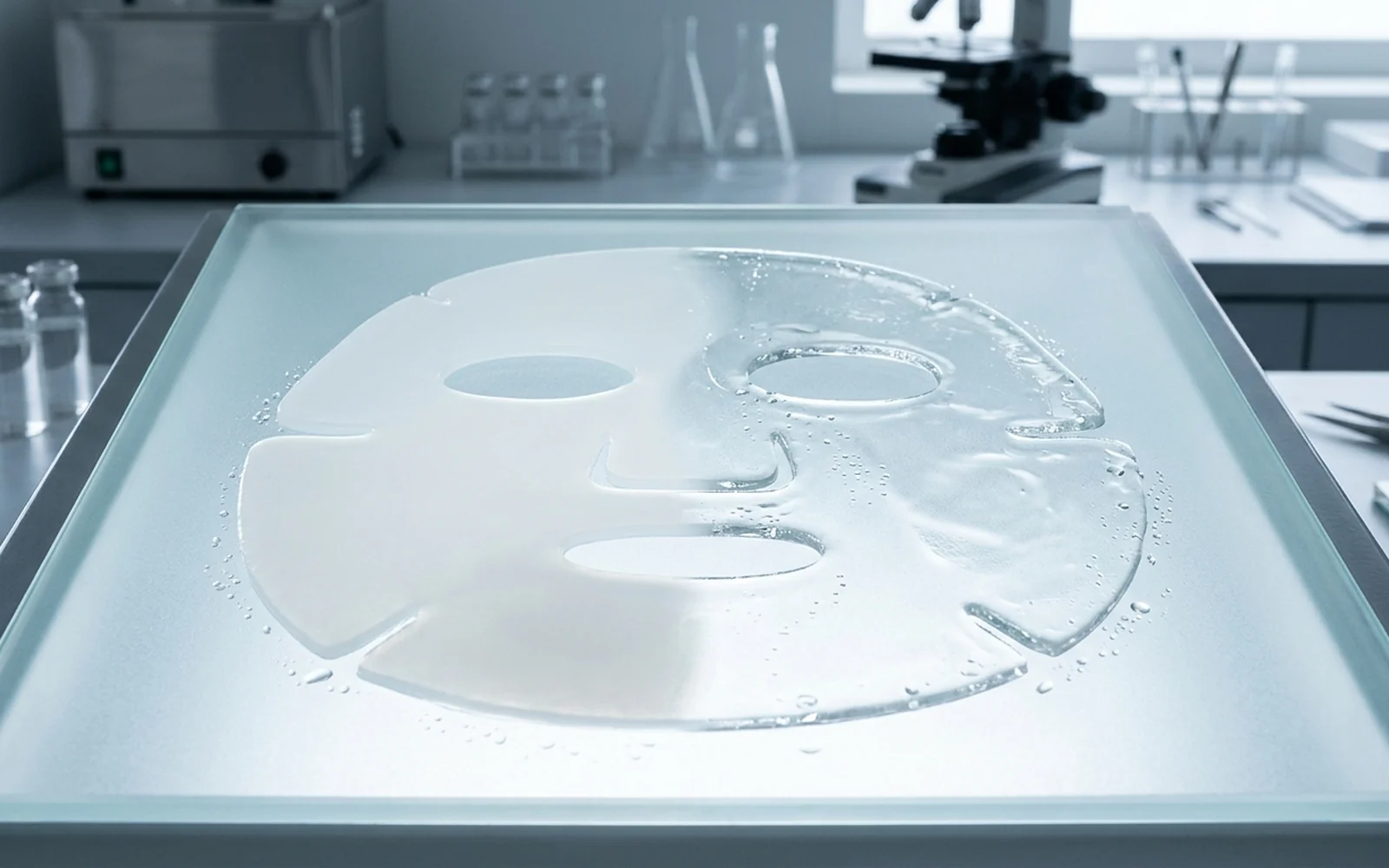
Contoured hydrogel facial mask transitioning from opaque milky-white emulsion gel to transparent hydrated gel on a backlit laboratory stage

Flagship ODM Format 01 · Optical Hydrogel Delivery

One-Step Clear-Turning Peptide & Nano-PDRN Hydrogel Mask

Cast as an opaque milky-white biphasic hydrogel whose micro-dispersed emollient phase scatters visible light. Over 45–120 minutes on skin, hydrated carrier actives partition into the stratum corneum and equalize the polymer network’s refractive index, turning the mask transparent.

Reference Active Stack:

  • AHPX+ (3.0% complex = 30 ppm net active Acetyl Hexapeptide-8 in CN120248173A chitosan carrier)
  • WUMO PDRN+™ (200 ppm 6:1 HCS@PDRN nano-assembled salmon DNA; +494.44% 4h Raman permeation)
  • Low-Endotoxin (< 0.5 EU/mL) Recombinant Humanized Type III Collagen (1,000 ppm reference)
  • WUMO OatCalm+™ (≥12% HPLC oat alkaloids for TRPV1 soothing during extended occlusive wear)
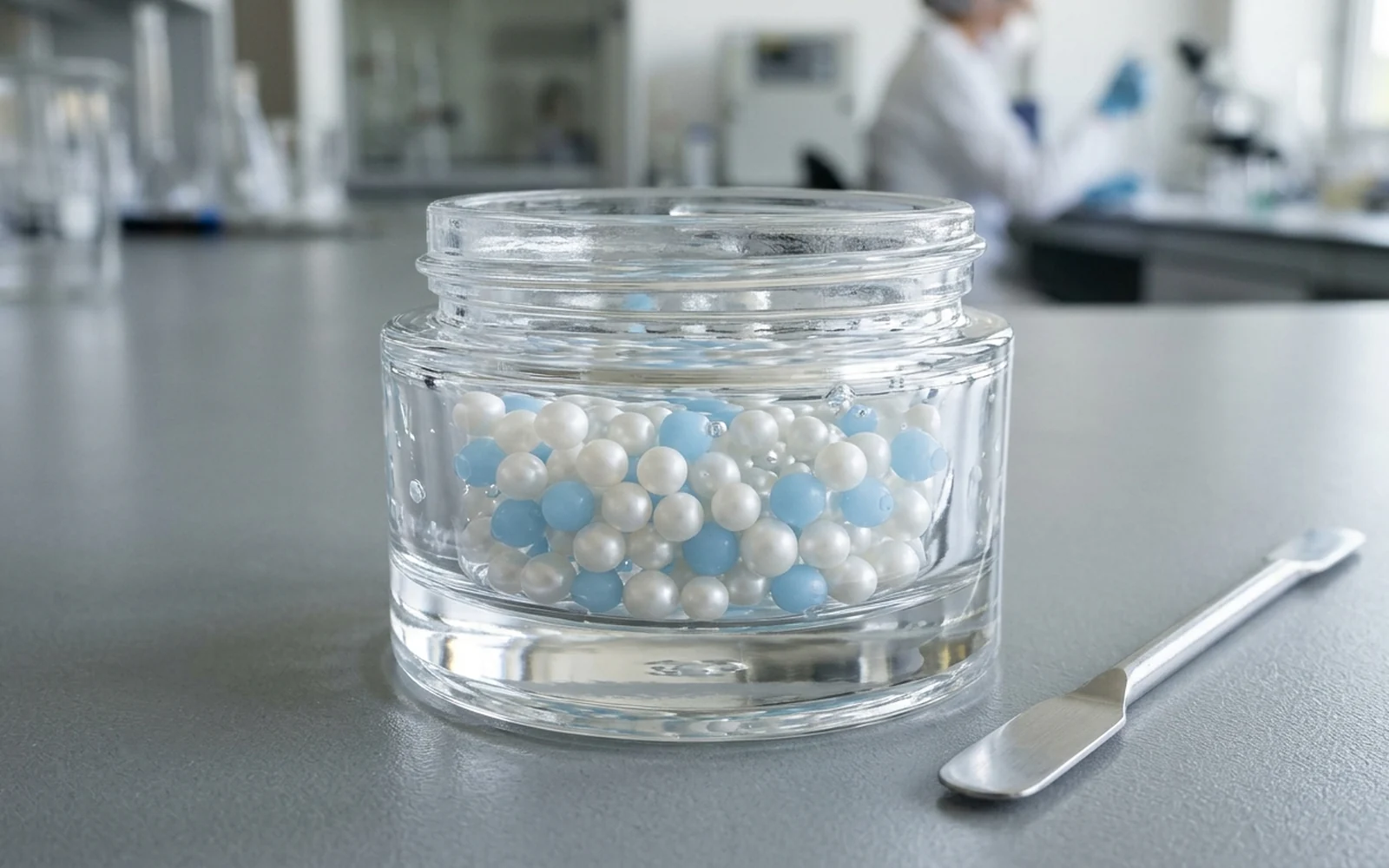
Unbranded glass cosmetic jar containing pearl-white and pale-blue active capsules suspended in a clear gel matrix next to a stainless steel lab spatula

Flagship ODM Format 02 · Dual-Phase Suspension

Dual-Phase Peptide & Nano-PDRN Suspended Capsule Cream

Isolates AHPX+ pro-peptides, WUMO PDRN+™, squalane, and ceramide NP inside soft lamellar capsules suspended evenly within an OatCalm+™ and < 0.5 EU/mL Type III Collagen outer gel. Capsules protect sensitive cores during storage and blend smoothly under fingertip shear with zero shell residue.

Reference Active Stack:

  • Inner Active Capsules: AHPX+ + WUMO PDRN+™ (or natural royal-blue true-assay GHK-Cu) + Ceramide NP
  • Outer Soothing Gel: WUMO OatCalm+™ (≥12% alkaloids) + < 0.5 EU/mL Recombinant Type III Collagen + Ectoin
  • Transit Rheology: Yield-stress polymer network prevents capsule floating or sinking at 45 °C and freeze-thaw
  • ISO 22716 Scope: Compounded and filled under Suzhou Xilin eye-care and facial emulsion GMP certification

Why Targeted Carrier Dosing Outperforms High-ppm Raw Powder Addition

Cutaneous absorption per microgram matters far more than loading unabsorbed macromolecular powder onto the skin surface. Pairing carrier-guided actives—such as AHPX+ (supplied as a 1,000 ppm aqueous complex, dosed at 0.5%–5.0% w/w during ~45 °C cool-down) and WUMO PDRN+™—with low-endotoxin Type III Collagen keeps finished bulk costs predictable while reducing tackiness and skin reactivity.

B2B formulation engineering comparison between high-ppm raw-powder addition or commodity animal collagen and WUMO carrier-guided dosing with low-endotoxin recombinant humanized type III collagen
Formulation Standard Why Commodity High-ppm / Animal-Source Shortcuts Fail WUMO & Suzhou Xilin Engineering Standard
Engineering Standard 01 · Bioavailability Economics Why Carrier-Guided Dosing (30 ppm / 200 ppm) Outperforms 2,000+ ppm Raw Powder Addition Because the stratum corneum blocks hydrophilic molecules above ~500 Da, adding 2,000+ ppm of unmodified peptide powder or free 50–1,500 kDa salmon DNA leaves most of the active on superficial corneocytes. That raises finished bulk cost, surface tackiness, and preservative load while low-end white-label quotes under-dose with trace label-claim stocks. We optimize cutaneous delivery per microgram. At 30 ppm net hexapeptide, AHPX+ (3% input of our 1,000 ppm liquid complex, added at ~45 °C) outperformed 300 ppm unmodified peptide in ACh release inhibition (-32.0% vs. -18.3%). Likewise, 200 ppm WUMO PDRN+™ builds on +494.44% 4h porcine Raman permeation to keep active performance high within a realistic unit-cost budget.
Engineering Standard 02 · Sensitive-Skin Raw-Material Purity Low-Endotoxin (< 0.5 EU/mL) Recombinant Humanized Type III Collagen Standard Commodity OEM masks and creams frequently use bovine, porcine, or marine hydrolyzed collagen, which can introduce animal or marine off-odors, wide molecular-weight drift, and uncontrolled bacterial endotoxins that provoke flushing on sensitized skin. For clear-turning hydrogel masks, capsule creams, and clinic barrier lines, WUMO pairs peptides and PDRN+™ with sequence-defined Recombinant Humanized Type III Collagen (1,000 ppm reference) controlled to bacterial endotoxin < 0.5 EU/mL—yielding an odorless, low-reactivity film suited to dermatology clinics and sensitive-skin routines.

Review Verified Cosmetic ODM MOQs, 6-Month Phased Filling & 100 kg Bulk Base Process →

Frequently Asked Questions: Transdermal PDRN & Hydrogel Mask ODM

Why does standard topical salmon DNA (PDRN) struggle to penetrate intact human skin?

Standard cosmetic Sodium DNA (PDRN extracted from Oncorhynchus mykiss or Oncorhynchus keta sperm) has a molecular weight of 50–1,500 kDa—hundreds of times above the 500 Da stratum corneum passive diffusion limit—and carries a strongly negative polyphosphate surface charge (measured Zeta potential -32.9 ± 5.18 mV) that is electrostatically repelled by negatively charged cell membranes.

How does WUMO PDRN+™ achieve +494.44% higher 4-hour transdermal permeation than free PDRN?

At a validated 6:1 Hydroxyethyl Chitosan-to-PDRN ratio, positively charged deacetylated amino groups electrostatically condense 539.5 ± 20.42 nm free PDRN (PDI 0.53) into monodisperse 188.0 ± 4.32 nm nanospheres (PDI 0.14, Zeta -16.1 mV). In third-party ex vivo porcine skin Raman spectroscopy, 1.2% carrier + 0.2% PDRN increased transdermal absorption by +494.44% at 4 hours, +213.77% at 8 hours, and +42.59% at 12 hours across 20–120 μm depth versus 0.2% free PDRN.

What happens to the Hydroxyethyl Chitosan carrier inside skin cells after delivering PDRN?

After entering fibroblasts via macropinocytosis (verified by 4h Cy5/FITC colocalization), the 6:1 HCS@PDRN complex undergoes protonation-driven swelling in mildly acidic endolysosomes to release active PDRN toward adenosine A2A receptors and the DNA salvage pathway. The chitosan carrier is naturally biodegraded by endogenous glycoside hydrolases into D-glucosamine.

How do Dr. Libo Du’s peer-reviewed publications relate to WUMO PDRN+™?

Dr. Libo Du’s first- and corresponding-author papers in Nanomedicine (2014, DOI: 10.1016/j.nano.2014.04.001) and RSC Advances (2013, DOI: 10.1039/c3ra42100g), together with 2024 Nanomaterials (10.3390/nano14070610) and 2026 International Journal of Nanomedicine (10.2147/ijn.s598897), establish the peer-reviewed polymer chemistry and macropinocytosis mechanism of hydroxyethyl-functionalized chitosan nanocarriers. The WUMO PDRN+™ Raman, DLS, and cellular datasets are separate enterprise and third-party preclinical evaluations conducted specifically on the cosmetic 6:1 HCS@PDRN system.

Which ODM skincare formats work best with WUMO PDRN+™?

WUMO PDRN+™ is stable across pH 5.0–8.0 (added at ≤45 °C) and is engineered for One-Step Clear-Turning Hydrogel Masks (e.g., 200 ppm PDRN+ + 30 ppm AHPX+ + < 0.5 EU/mL Recombinant Humanized Type III Collagen + OatCalm+™), Dual-Phase Suspended Capsule Creams, post-procedure soothing clinic essences, and firming eye/neck emulsions.

Direct R&D & ISO 22716 Factory Consultation

Request WUMO PDRN+™ Samples, Clear-Turning Hydrogel Masks, or Capsule Cream ODM

Share your brand or laboratory website, target format (raw WUMO PDRN+™ complex, One-Step Clear-Turning Hydrogel Mask, Dual-Phase Capsule Cream, or clinic essence), and destination regulatory market.

WUMO PDRN+™ Transdermal Salmon DNA & Flagship ODM Inquiry

Tell us whether you are evaluating raw WUMO PDRN+™ liquid complex, bulk semi-finished gel/cream bases, or turnkey custom-packaged hydrogel masks and capsule creams.

If the embedded form does not load, email [email protected] with your company URL and formulation brief.

Email Instead