WUMO OatCalm+™ · Supercritical CO2 + Negative-Charge Enrichment

Avenanthramides ≥12% Extract: Supercritical Oat Alkaloids for Sensitive-Skin Formulations

Conventional water- or ethanol-extracted oat waters contain only trace parts-per-million of active alkaloids and often brown in storage. WUMO OatCalm+™ pairs selective supercritical CO2 extraction (3.8× higher yield) with surface negative-charge enrichment to standardize ≥12% total oat alkaloids by HPLC—co-concentrating at least 7 natural avenanthramides (A, B, C) and caffeic acid derivatives with over 3× stronger cytokine suppression than standard oat extract.

At-a-Glance Head-to-Head Comparison Card

Conventional Water/Ethanol Oat Extract vs. WUMO OatCalm+™ (≥12% HPLC Alkaloids)

≥ 12% HPLC Alkaloids 3.8× Supercritical CO2 ≥ 95% 45 °C Retention
Head-to-head comparison between conventional water or ethanol oat extract and WUMO OatCalm+ supercritical CO2 negative-charge-enriched ≥12% oat alkaloid complex
Evaluation Dimension Conventional Water / Ethanol Oat Extract WUMO OatCalm+™ (Supercritical CO2 ≥12% Complex)
Extraction & Enrichment Architecture Conventional hot-water or hydroethanolic extraction; unselective sugar/protein co-elution Selective Supercritical CO2 Extraction (3.8× yield) + Surface Negative-Charge-Guided Alkaloid Enrichment
Quantified Active Alkaloid Assay Typically 100 ppm – 1,000 ppm (0.01%–0.1%) trace avenanthramides or synthetic single dihydroavenanthramide D ≥ 12.0% Total Oat Alkaloid Complex by HPLC (co-concentrating ≥7 natural oat alkaloids incl. Avenanthramides A, B, C & caffeic acid derivatives)
Accelerated Thermal Stability (45 °C / 3 Months) Prone to rapid oxidative browning, odor drift, and phenolic assay loss ≥ 95% active alkaloid retention after 3 months at 45 °C (water-soluble clear to pale-yellow liquid)
In-Vitro Anti-Inflammatory Potency 1.0× equal-concentration conventional oat extract baseline > 3× comprehensive suppression of TNF-α, IL-1β, and IL-6; strong ROS scavenging & LPS-injury cell recovery
Neuro-Sensory & Physical Barrier Targets Mild surface humectancy without multi-receptor or tight-junction substantiation Inhibits TRPV1, PAR-2 & Substance P mast-cell degranulation; upregulates Filaggrin (FLG) & Claudin-1; lowers serum IgE in DNFB model
Formulation Window & Packaging Fit High input % needed for efficacy, often clouding clear essences or hydrogel masks 0.5% – 3.0% w/w at pH 4.5 – 7.0 (pair with light-shielded/airless packaging; avoid cationic PHMB preservatives)

Preclinical Mechanism vs. Equal-Dose Conventional Oat Extract

Four-Pathway Soothing Architecture: From TRPV1 Nerve Endings to Claudin-1 Tight Junctions

Designed for AHA/PHA post-peel serums, retinoid companion creams, aesthetic-clinic post-procedure masks, and gentle eye-care / family skincare within Suzhou Xilin’s ISO 22716 scope.

Pillar 01 · Immediate Neuro-Sensory Calming

TRPV1, PAR-2 & Substance P Mast-Cell Blockade

Targets capsaicin heat/pain receptor TRPV1, protease-activated receptor PAR-2, and Substance P-triggered mast-cell degranulation—calming cosmetic stinging, burning, itching, and redness after AHA/PHA peels, retinoids, or seasonal barrier stress.

Pillar 02 · >3× Cytokine & Oxidative Suppression

LPS Cellular Recovery, ROS Clearance & >3× Cytokine Inhibition

Benchmarked head-to-head against equal-concentration conventional oat extract: restores LPS-compromised cell viability, accelerates 24-hour scratch closure and EdU proliferation, clears intracellular ROS fluorescence, and delivers >3× anti-inflammatory inhibition across TNF-α, IL-1β, and IL-6.

Pillar 03 · Physical Barrier Gene Reconstruction

Filaggrin (FLG) & Claudin-1 Tight-Junction Restoration

Validated by qPCR and membrane immunofluorescence: significantly upregulates epidermal structural protein Filaggrin (FLG) and restores continuous cell-membrane Claudin-1 tight-junction networks.

Pillar 04 · In Vivo Soothing Substantiation

Serum IgE Reduction & Epidermal Comfort in DNFB Model

In a murine DNFB contact-sensitization model versus equal-dose conventional oat extract, markedly lowers serum allergy biomarker IgE (ng/mL), visible erythema/scaling, and inflammatory epidermal thickening.

Original Immunofluorescence & Histology Evidence

Visual Proof: Claudin-1 Tight-Junction Restoration & DNFB Contact Dermatitis Soothing

Direct preclinical microscopy and GraphPad quantitative plots comparing WUMO OatCalm+™ (≥12% HPLC oat alkaloids) against conventional aqueous/ethanolic oat extract.

Figure 1 · Barrier Tight-Junction Immunofluorescence

Continuous Membrane Claudin-1 Restoration vs. Conventional Oat Extract

Immunofluorescence microscopy (30 μm scale) and quantitative intensity analysis (** p < 0.01) confirm robust restoration of continuous intercellular Claudin-1 tight junctions alongside Filaggrin upregulation.

Figure 2 · In Vivo DNFB Contact Dermatitis H&E Histology

Dose-Dependent Epidermal Hyperplasia Relief Across Low / Middle / High Groups

H&E skin histology and epidermal thickness measurements (μm, *** p < 0.001) in murine DNFB contact sensitization confirm dose-dependent calming of inflammatory epidermal thickening and lowered serum IgE.

Laboratory Figure Preview

Claudin-1 green immunofluorescence and DAPI nuclear staining comparing LPS barrier damage, conventional oat extract, and WUMO OatCalm+

Formulator Bench Checklist

Co-Formulating WUMO OatCalm+™ With Peptides, Nano-PDRN & Acid Buffers

Practical bench parameters so R&D chemists achieve crystal-clear serums, stable capsule creams, and non-weeping hydrogels on the first pilot batch.

Dosage, pH & Addition Stage

0.5% – 3.0% w/w · pH 4.5 – 7.0 Aqueous Incorporation

  • Daily Sensitive-Skin Serums & Mists: Use at 0.5%–1.5% w/w alongside Palmitoyl Tripeptide-8, Ectoin, or buffered Copper Tripeptide-1 (GHK-Cu).
  • Post-Peel & Clinic Comfort Masks / Creams: Use at 1.5%–3.0% w/w with WUMO PDRN+™ and < 0.5 EU/mL Recombinant Humanized Type III Collagen.
  • Thermal Stability: Retains ≥95% HPLC alkaloid content after 3 months at 45 °C; add during cool-down (≤45 °C) when compounding alongside peptides.

Ionic Compatibility & Primary Packaging

Preventing Cationic Haze & Photo-Oxidation

  • Avoid Strong Cationic Preservatives: Because OatCalm+™ concentrates negatively charged oat alkaloids and phenolic amides, do not combine directly with strong cationic biguanides or quaternary salts such as Polyaminopropyl Biguanide (PHMB). Pair with non-ionic systems (Hydroxyacetophenone + 1,2-Hexanediol or Pentylene Glycol).
  • Light-Shielded or Airless Containers: Specify UV-amber or frosted glass, aluminum-barrier foil sachets for hydrogel masks, or airless pump bottles for barrier creams to preserve pale clarity.
  • Eye & Children’s Cosmetic GMP Scope: Suzhou Xilin’s ISO 22716:2007 certificate (27825-2025GPOC00009R000) explicitly covers eye-care and children’s skincare emulsions.

ISO 22716 Flagship ODM Formats & Formulation Economics

Turnkey Hydrogel Mask & Capsule Cream Architectures

Developed for clinical skincare brands, dermatology clinic groups, and regional distributors seeking distinct physical dosage forms backed by carrier permeation data and < 0.5 EU/mL Type III Collagen purity.

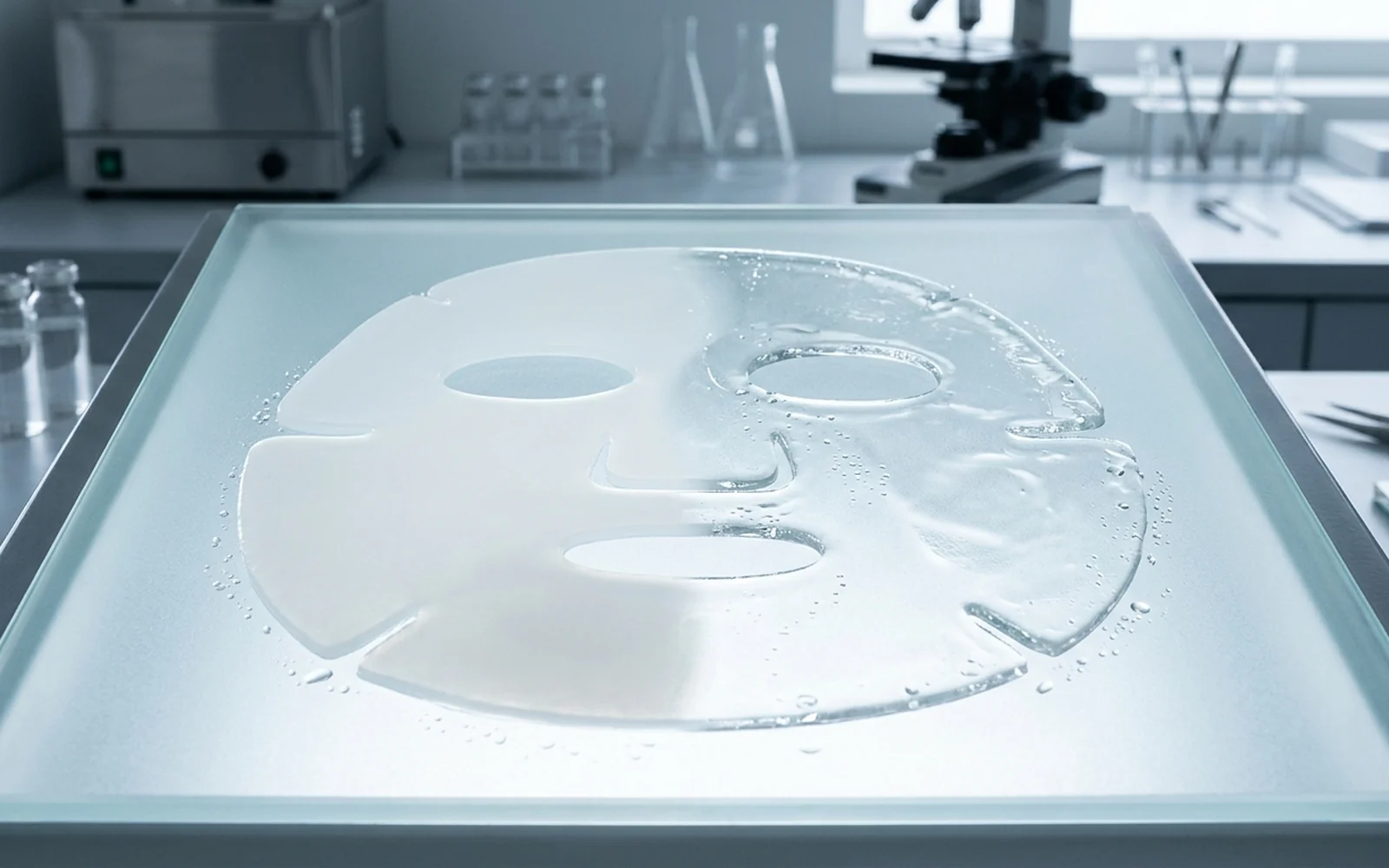
Contoured hydrogel facial mask transitioning from opaque milky-white emulsion gel to transparent hydrated gel on a backlit laboratory stage

Flagship ODM Format 01 · Optical Hydrogel Delivery

One-Step Clear-Turning Peptide & Nano-PDRN Hydrogel Mask

Cast as an opaque milky-white biphasic hydrogel whose micro-dispersed emollient phase scatters visible light. Over 45–120 minutes on skin, hydrated carrier actives partition into the stratum corneum and equalize the polymer network’s refractive index, turning the mask transparent.

Reference Active Stack:

  • AHPX+ (3.0% complex = 30 ppm net active Acetyl Hexapeptide-8 in CN120248173A chitosan carrier)
  • WUMO PDRN+™ (200 ppm 6:1 HCS@PDRN nano-assembled salmon DNA; +494.44% 4h Raman permeation)
  • Low-Endotoxin (< 0.5 EU/mL) Recombinant Humanized Type III Collagen (1,000 ppm reference)
  • WUMO OatCalm+™ (≥12% HPLC oat alkaloids for TRPV1 soothing during extended occlusive wear)
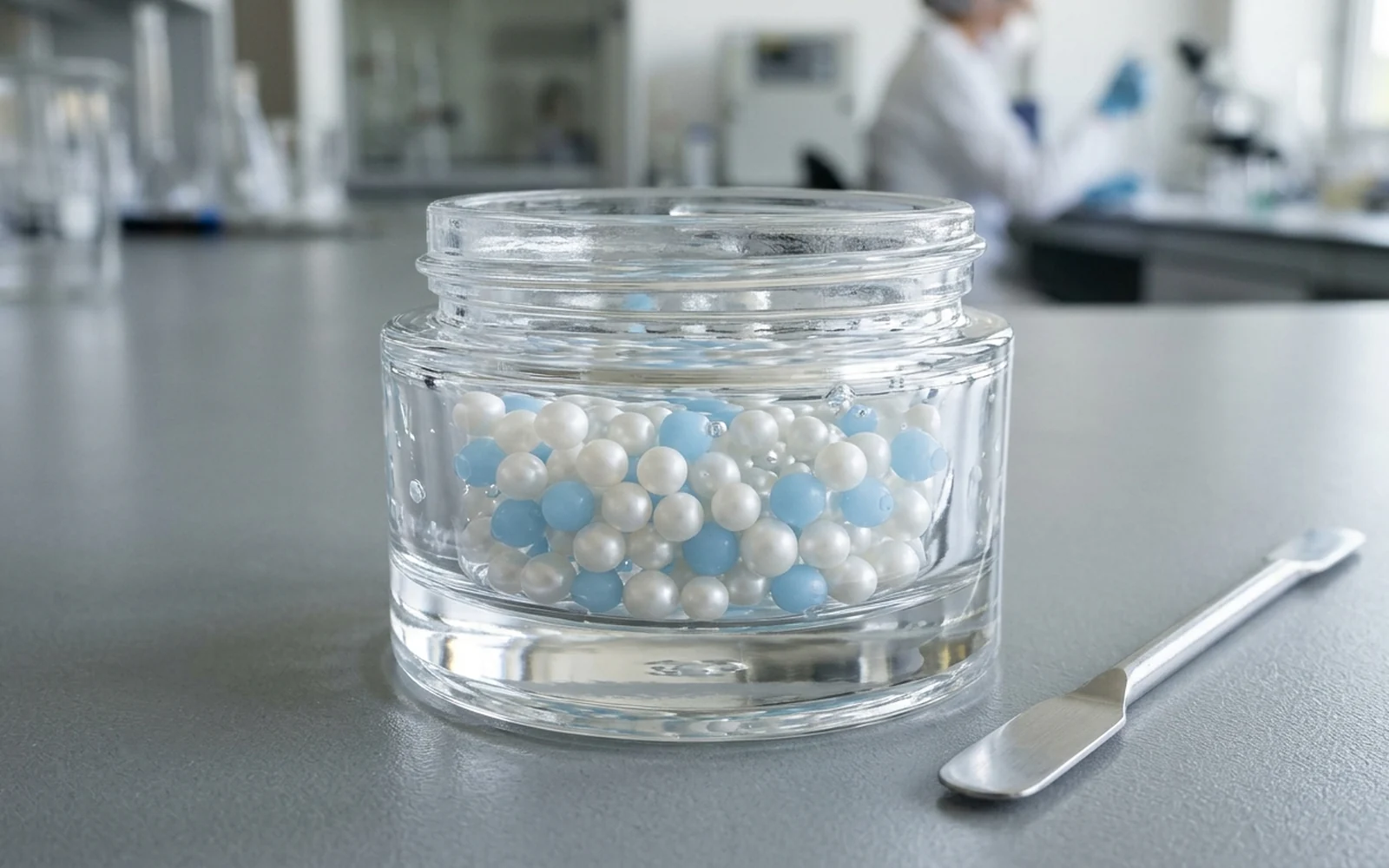
Unbranded glass cosmetic jar containing pearl-white and pale-blue active capsules suspended in a clear gel matrix next to a stainless steel lab spatula

Flagship ODM Format 02 · Dual-Phase Suspension

Dual-Phase Peptide & Nano-PDRN Suspended Capsule Cream

Isolates AHPX+ pro-peptides, WUMO PDRN+™, squalane, and ceramide NP inside soft lamellar capsules suspended evenly within an OatCalm+™ and < 0.5 EU/mL Type III Collagen outer gel. Capsules protect sensitive cores during storage and blend smoothly under fingertip shear with zero shell residue.

Reference Active Stack:

  • Inner Active Capsules: AHPX+ + WUMO PDRN+™ (or natural royal-blue true-assay GHK-Cu) + Ceramide NP
  • Outer Soothing Gel: WUMO OatCalm+™ (≥12% alkaloids) + < 0.5 EU/mL Recombinant Type III Collagen + Ectoin
  • Transit Rheology: Yield-stress polymer network prevents capsule floating or sinking at 45 °C and freeze-thaw
  • ISO 22716 Scope: Compounded and filled under Suzhou Xilin eye-care and facial emulsion GMP certification

Why Targeted Carrier Dosing Outperforms High-ppm Raw Powder Addition

Cutaneous absorption per microgram matters far more than loading unabsorbed macromolecular powder onto the skin surface. Pairing carrier-guided actives—such as AHPX+ (supplied as a 1,000 ppm aqueous complex, dosed at 0.5%–5.0% w/w during ~45 °C cool-down) and WUMO PDRN+™—with low-endotoxin Type III Collagen keeps finished bulk costs predictable while reducing tackiness and skin reactivity.

B2B formulation engineering comparison between high-ppm raw-powder addition or commodity animal collagen and WUMO carrier-guided dosing with low-endotoxin recombinant humanized type III collagen
Formulation Standard Why Commodity High-ppm / Animal-Source Shortcuts Fail WUMO & Suzhou Xilin Engineering Standard
Engineering Standard 01 · Bioavailability Economics Why Carrier-Guided Dosing (30 ppm / 200 ppm) Outperforms 2,000+ ppm Raw Powder Addition Because the stratum corneum blocks hydrophilic molecules above ~500 Da, adding 2,000+ ppm of unmodified peptide powder or free 50–1,500 kDa salmon DNA leaves most of the active on superficial corneocytes. That raises finished bulk cost, surface tackiness, and preservative load while low-end white-label quotes under-dose with trace label-claim stocks. We optimize cutaneous delivery per microgram. At 30 ppm net hexapeptide, AHPX+ (3% input of our 1,000 ppm liquid complex, added at ~45 °C) outperformed 300 ppm unmodified peptide in ACh release inhibition (-32.0% vs. -18.3%). Likewise, 200 ppm WUMO PDRN+™ builds on +494.44% 4h porcine Raman permeation to keep active performance high within a realistic unit-cost budget.
Engineering Standard 02 · Sensitive-Skin Raw-Material Purity Low-Endotoxin (< 0.5 EU/mL) Recombinant Humanized Type III Collagen Standard Commodity OEM masks and creams frequently use bovine, porcine, or marine hydrolyzed collagen, which can introduce animal or marine off-odors, wide molecular-weight drift, and uncontrolled bacterial endotoxins that provoke flushing on sensitized skin. For clear-turning hydrogel masks, capsule creams, and clinic barrier lines, WUMO pairs peptides and PDRN+™ with sequence-defined Recombinant Humanized Type III Collagen (1,000 ppm reference) controlled to bacterial endotoxin < 0.5 EU/mL—yielding an odorless, low-reactivity film suited to dermatology clinics and sensitive-skin routines.

Review Verified Cosmetic ODM MOQs, 6-Month Phased Filling & 100 kg Bulk Base Process →

Frequently Asked Questions: WUMO OatCalm+™ (≥12% Avenanthramides)

How does WUMO OatCalm+™ differ from standard oat extract or single synthetic avenanthramide?

Instead of dilute water/ethanol oat extracts or single synthetic hydroxyphenyl propamidobenzoic acid, WUMO OatCalm+™ uses selective supercritical CO2 extraction (3.8× higher yield) coupled with surface negative-charge enrichment to co-concentrate at least 7 natural oat bran alkaloids—including Avenanthramides A, B, C and caffeic acid derivatives—to ≥12% total oat alkaloids quantified by HPLC.

What neuro-sensory and skin-barrier pathways does WUMO OatCalm+™ target?

In preclinical benchmarking against equal-concentration conventional oat extract, WUMO OatCalm+™ blocks TRPV1 (heat/sting receptor), PAR-2, and Substance P-induced mast-cell degranulation, delivers >3× higher inhibition of TNF-α, IL-1β, and IL-6, upregulates Filaggrin (FLG) and continuous membrane Claudin-1 tight junctions, and lowers serum IgE (ng/mL) in a murine DNFB sensitization model.

What are the stability, pH, and preservative compatibility rules for WUMO OatCalm+™?

WUMO OatCalm+™ is a clear to pale-yellow water-soluble liquid used at 0.5%–3.0% w/w across pH 4.5–7.0, retaining ≥95% active alkaloid content after 3 months at 45 °C. Formulators should pair it with UV-shielded or airless packaging and avoid direct co-formulation with strong cationic preservatives such as Polyaminopropyl Biguanide (PHMB).

Why combine WUMO OatCalm+™ with < 0.5 EU/mL Recombinant Humanized Type III Collagen in post-facial masks?

Sensitized or post-peel/post-laser cosmetic skin reacts poorly to trace bacterial endotoxins and stinging triggers. Pairing ≥12% OatCalm+™ (immediate TRPV1/PAR-2 neuro-soothing) with Recombinant Humanized Type III Collagen controlled to bacterial endotoxin < 0.5 EU/mL creates an odorless, ultra-gentle soothing hydrogel mask or barrier cream.

Direct R&D & ISO 22716 Factory Consultation

Request WUMO OatCalm+™ Samples or Sensitive-Skin / Post-Procedure ODM Prototypes

Share your target product direction (raw ≥12% OatCalm+™ active, clear-turning hydrogel mask, dual-phase capsule cream, or airless barrier face/body cream) and destination regulatory market.

WUMO OatCalm+™ (≥12% Oat Alkaloids) & Sensitive-Skin ODM Inquiry

Tell us whether you need raw ingredient evaluation samples, bulk kg/liter semi-finished soothing bases, or custom-packaged private-label ODM.

If the embedded form does not load, email [email protected] with your company URL and formulation brief.

Email Instead